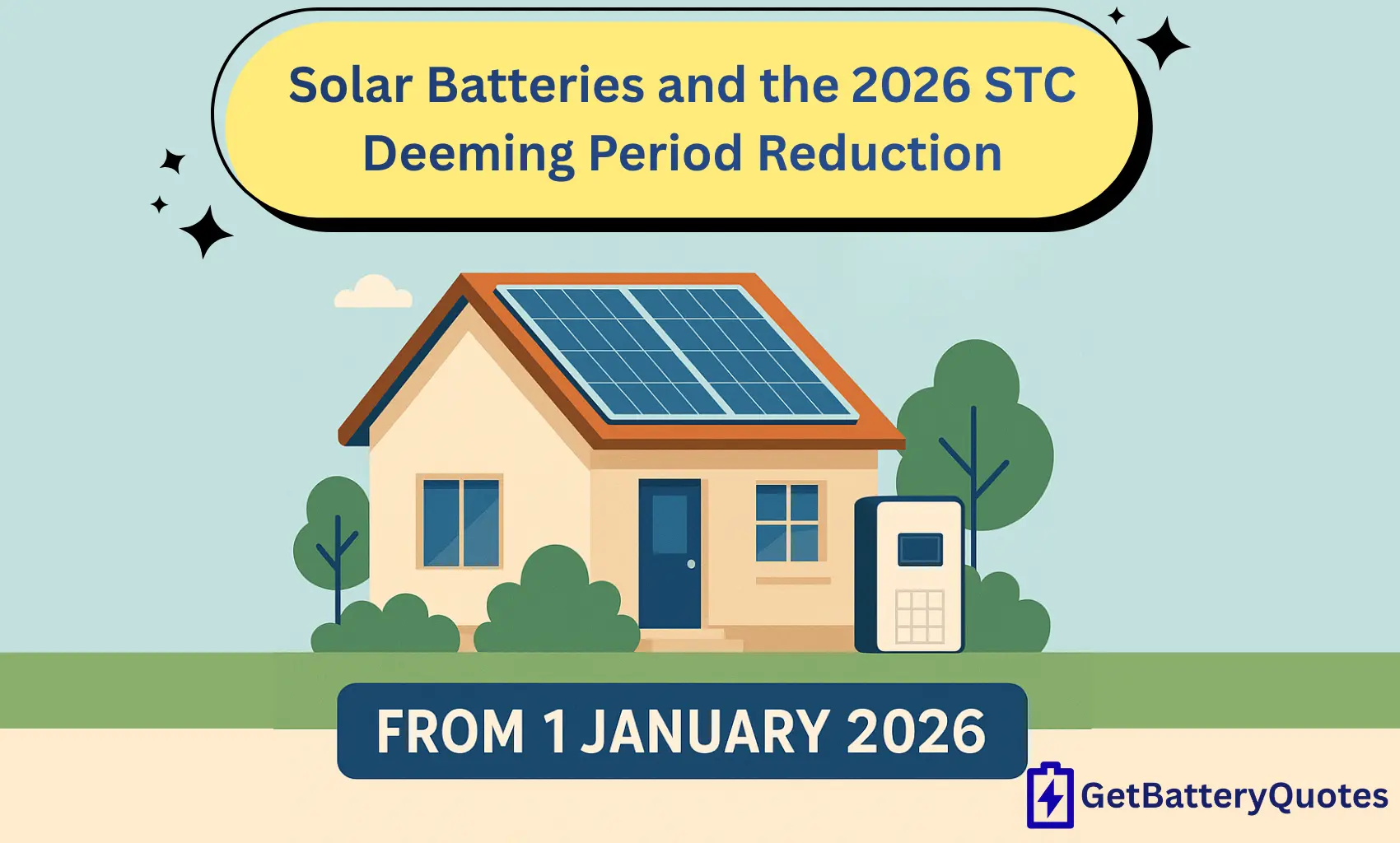
The rebate is still available but in many cases, it will be lower than earlier in 2026
The Big Picture: More Funding, Different Structure
- Support over 2 million battery installations by 2030
- Deliver around 40 GWh of additional storage capacity
So while more funding is being committed, the rebate itself is being adjusted to remain sustainable as battery prices fall and adoption increases.
What’s Changing on 1 May 2026?
What’s Changing on 1 May 2026?
- The STC factor drops from 8.4 to 6.8
What this means:
- The same battery installed after May will receive fewer STCs
- Fewer STCs means a lower upfront discount
2. The Rebate Becomes Tiered by Battery Size
- 0 to 14 kWh → 100% of STC factor
- 14 to 28 kWh → 60% of STC factor
- 28 to 50 kWh → 15% of STC factor
What this means:
- Smaller systems receive the highest rebate per kWh
- Larger systems receive reduced support on additional capacity
This change is designed to keep the rebate around 30% across different system sizes, rather than heavily favouring large systems.
How Much Does This Reduce the Rebate?
Let’s break this down in practical terms.
10 kWh Battery
- Entire system sits within the 0–14 kWh tier
- Only impacted by the STC factor drop
15 to 20 kWh Battery
- First 14 kWh at full rate
- Remaining capacity at reduced rate
👉 Impact:
- Lower STC factor
- Reduced support on part of the system
30 kWh+ Battery
- First 14 kWh at full rate
- Next 14 kWh at 60%
- Remaining capacity at only 15%
👉 Larger systems see the biggest drop in rebate value
Why Is the Government Making These Changes?
- Maintain roughly 30% discount across battery sizes
- Adjust support as battery prices decline
- Spread the rebate across more households
⚠️ Can You Still Install Before 1 May 2026?
- Fully booked in the lead-up to May
- Experiencing high demand due to rebates and rising interest in batteries
The Reality: Most Installations Will Happen After May
Even if you request quotes now:
- You may receive pricing before May
- But installation dates are often scheduled after May
What Actually Matters More Than Timing
- Choosing the wrong system size
- Compatibility issues with your solar setup
- Lower long-term savings
Instead, focus on:
1. Getting the right battery size
Undersized systems often deliver poor value.
2. Ensuring system compatibility
Your inverter and solar system must support battery integration.
3. Understanding your usage
Your energy habits determine how much you actually save.
Are Batteries Still Worth It After May 2026?
- Battery prices are gradually coming down
- Energy tariffs are evolving
- New programs (like daytime pricing incentives) are emerging
Final Thoughts
The changes from 1 May 2026 are meaningful, particularly due to:
- The drop in STC factor
- The introduction of tiered rebate support
- However
- The rebate is still available
- The program is expanding
- Support continues through to 2030
Thinking About a Battery?
If you’re considering a battery, it’s worth understanding:
- What rebate you’re eligible for
- What system size suits your home
- What savings you can realistically expect
👉 Get up to 3 quotes from local installers and compare your options.