Updated October 2026
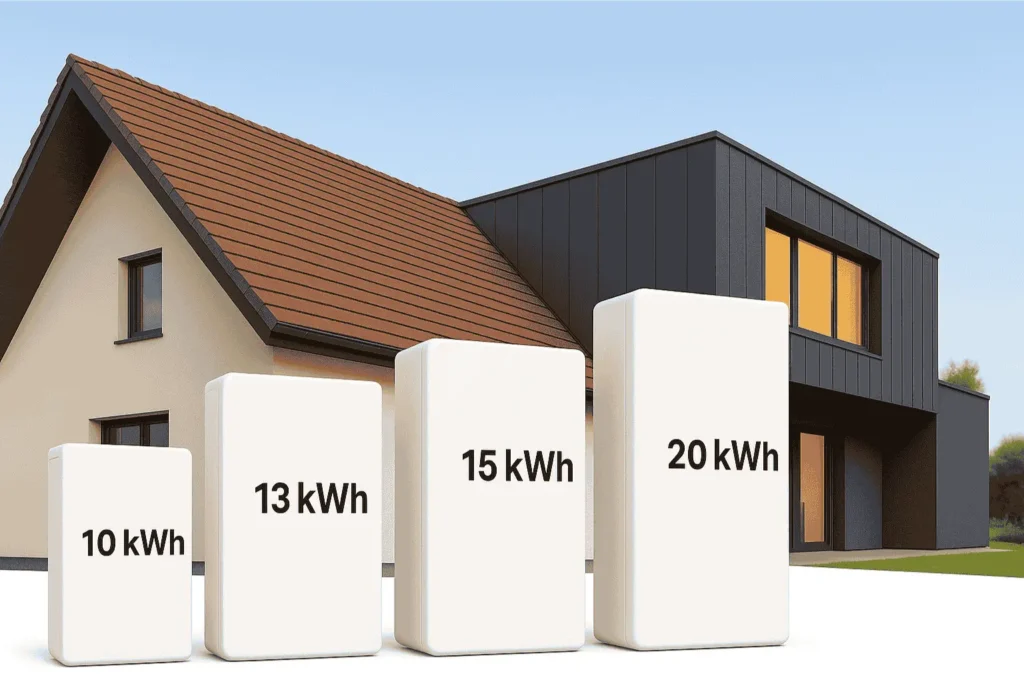
Solar battery prices in Australia range from about $7,500 to $19,000 installed after the federal rebate in 2026. A 10kWh battery typically costs $7,500–$10,500, a 13.5kWh battery $9,500–$13,500, a 15kWh battery $10,500–$15,000 and a 20kWh battery $14,000–$19,000. These are indicative prices for a standard single-phase install and exclude a new hybrid inverter if your home needs one.
The solar battery price in an ad is rarely the price you pay. Since 1 May 2026 the federal rebate has been tiered, so a 20kWh battery earns about $630 less rebate than it would at the full per-kWh rate. It also steps down again on 1 January 2027.
This guide shows what 10kWh, 13kWh, 15kWh and 20kWh batteries cost in Australia, before and after the rebate, and what can push your own quote up or down. Use it to sanity-check quotes before you compare installers.
A quick note on “kW”: when people search for a “10kW solar battery” they almost always mean 10kWh of storage. kWh is how much energy the battery holds. kW is how fast it can charge or discharge. We use usable kWh throughout.
How the 2026 Rebate Changes Solar Battery Price
The federal Cheaper Home Batteries Program cuts the upfront cost through Small-scale Technology Certificates (STCs). Your discount is usable capacity × STC factor × STC price. For installs from 1 May to 31 December 2026 the STC factor is 6.8, and it now tapers by battery size, according to the Clean Energy Regulator:
- First 14kWh: 100% of the STC factor
- 14kWh to 28kWh: 60%
- 28kWh to 50kWh: 15%
The table shows what that means for the four sizes in this guide. It uses an assumed $37 per STC, which allows for admin costs and sits just below the roughly $40 certificates typically trade at. STCs round down, and your installer’s figure can differ slightly.
| Battery (usable) | STC calculation (factor 6.8) | STCs | Rebate at $37 per STC |
|---|---|---|---|
| 10kWh | 10 × 6.8 | 68 | $2,516 |
| 13.5kWh | 13.5 × 6.8 | 91 | $3,367 |
| 15kWh | (14 × 6.8) + (1 × 6.8 × 60%) | 99 | $3,663 |
| 20kWh | (14 × 6.8) + (6 × 6.8 × 60%) | 119 | $4,403 |
The rebate is not means tested. The battery must be installed by an accredited installer, and the install must be on or after 1 July 2025. A battery above 14kWh still earns a rebate, but each extra kWh earns about $151 instead of $252.
10kW (10kWh) Solar Battery Price in Australia
A 10kWh solar battery costs about $10,000–$13,000 installed before the rebate and $7,500–$10,500 after it. The rebate is about $2,516, and many 2026 quotes land around $8,450–$8,900 after rebate.
It is the most common size for Australian homes. It covers most evening use and can back up essential circuits during a blackout.
Who a 10kWh battery suits
- Homes with 6.6kW to 10kW of solar.
- Households using 8–10kWh of electricity after sunset
- Families of three or four
- People who want essential-circuit backup, not whole-home backup
13kW (13.5kWh) Solar Battery Price in Australia
A 13.5kWh solar battery costs about $13,000–$17,000 before the rebate and $9,500–$13,500 after it. The rebate is $3,367, and the whole battery sits inside the first 14kWh tier, so it earns the full rate on every kWh. The Tesla Powerwall 3 is the best-known battery in this size.
Who a 13.5kWh battery suits
- Homes with 10kW to 13kW of solar
- Households using 12–14kWh after sunset
- People joining a Virtual Power Plant
- Buyers who want an all-in-one unit with a built-in inverter
15kW (15kWh) Solar Battery Price in Australia
A 15kWh solar battery costs about $14,000–$18,500 before the rebate and $10,500–$15,000 after it. The rebate is $3,663. Crossing 14kWh matters here: the 15th kWh earns only 60% of the rate, so a 15kWh battery gets about $148 more rebate than a 14kWh one.
That makes 15kWh a good fit when your usage genuinely needs it, but not a way to gain rebate.
Who a 15kWh battery suits
- Homes with solar systems over 10kW
- Households using 12–16kWh after sunset
- Families planning to electrify appliances or add an EV
- Buyers who want automatic whole-home backup
20kW (20kWh) Solar Battery Price in Australia
A 20kWh solar battery costs about $18,500–$23,500 before the rebate and $14,000–$19,000 after it. The rebate is $4,403, which is roughly $630 less than the full per-kWh rate would give on 20kWh. The extra 6kWh above the 14kWh line each earns about $151 instead of $252.
A 20kWh battery covers nearly all night-time use in a large home, but only if your solar can fill it, especially in winter. Aim for 10kW or more of solar for any battery above 15kWh.
Who a 20kWh battery suits
- Homes with high night-time use or several electric appliances
- Families seeking complete blackout protection for the entire home
- Those who want to invest once and avoid future battery upgrades
Solar Battery Price Comparison Summary (2026)
These are indicative installed prices for a standard single-phase home, including GST and installation. They exclude a new hybrid inverter if one is needed and exclude state incentives. The rebate uses a 6.8 STC factor at $37 per STC, for installs from 1 May to 31 December 2026.
| Battery size (usable) | Price before rebate | Federal rebate | Price after rebate |
|---|---|---|---|
| 10kWh | $10,000–$13,000 | $2,516 | $7,500–$10,500 |
| 13.5kWh | $13,000–$17,000 | $3,367 | $9,500–$13,500 |
| 15kWh | $14,000–$18,500 | $3,663 | $10,500–$15,000 |
| 20kWh | $18,500–$23,500 | $4,403 | $14,000–$19,000 |
Ranges are compiled from published installer and comparison-site pricing in October 2026 plus the rebate maths above. Your quote will differ with brand, inverter, phase and install complexity.
Solar Battery Price by Brand
Brand swings the solar battery price by thousands of dollars at the same capacity. The table shows typical installed prices after the federal rebate, based on August 2026 market data. They exclude state incentives and assume a standard install. Click a brand for our full review.
The Tesla solar battery price is about $13,100–$13,600 installed after rebate, with 2026 pricing for the Powerwall 3 around $13,643. Cost per kWh is the fairest way to compare, but also weigh warranty, backup ability and whether the battery works with your existing inverter.Solar Battery Price by State: Adelaide, Sydney, Brisbane and Beyond
The federal rebate applies in every state, and the sticker price of a battery is fairly similar nationwide. What changes your solar battery price in Adelaide, Sydney, Brisbane or Melbourne is installer competition, labour and travel, roof and cable runs, and any state incentive stacked on top.
Where a state adds help, it comes on top of the federal rebate. Check the guide for your state:
Several earlier state schemes have closed, including South Australia’s Home Battery Scheme and the Northern Territory’s program. In those states the federal rebate is the main discount, and retailer VPP offers can add bill credits on top.
What Else Affects Your Solar Battery Installation Cost
The battery is only part of the bill. Ask every installer to itemise these:
| Cost item | Typical extra cost | When it applies |
|---|---|---|
| Hybrid inverter or charger | About $1,700–$2,200 | Your current inverter can’t run a battery |
| Backup gateway | $1,500–$3,500 | You want whole-home backup in a blackout |
| Switchboard and electrical upgrades | $500–$2,000 | Older or crowded switchboards |
| Three-phase connection | Often higher than single phase | Three-phase homes need a compatible system |
| Difficult install | Varies by quote | Multi-storey homes, tiled roofs, long cable runs, asbestos eaves |
Figures are typical 2026 market ranges. The inverter cost comes from the gap between battery-only and battery-plus-inverter prices. For a checklist of what to confirm before the installer leaves, see our home battery installer checklist.
How to Choose the Right Battery Size for the Best Value
The cheapest solar battery price is not always the best deal. Size the battery to your home first, then compare quotes on cost per usable kWh.
- Check your evening use. Look at how many kWh you use after sunset. If it is 5–7kWh, a 15kWh or 20kWh battery is overkill.
- Check your daily solar export. A battery your panels can’t fill, especially in winter, leaves part of your money unused. Aim for 10kW or more of solar for any battery above 15kWh.
- Decide on backup. Essential-circuit backup (lights, fridge, Wi-Fi) costs less than whole-home backup, which needs a backup gateway.
- Think about a VPP. Some Virtual Power Plant plans prefer or require certain battery sizes. See our VPP guide.
- Plan for upgrades. If an EV or gas-to-electric switch is coming, sizing up now can beat retrofitting later.
- Remember the 14kWh line. Under the tiered rebate, the first 14kWh earns the full rate. Capacity beyond that is worth buying only if you will use it.
The 1 January 2027 Rebate Drop
The STC factor falls from 6.8 to 5.7 for installs from 1 January 2027. The factor applies on the day your battery is installed, not the day you sign, so a delayed install can cost you rebate. Using the same $37 per STC:
| Battery size | Rebate now (May–Dec 2026) | Rebate from 1 Jan 2027 | Difference |
|---|---|---|---|
| 10kWh | $2,516 | $2,109 | −$407 |
| 13.5kWh | $3,367 | $2,812 | −$555 |
| 15kWh | $3,663 | $3,071 | −$592 |
| 20kWh | $4,403 | $3,700 | −$703 |
Solar Battery Price FAQs
Most solar batteries cost between $7,500 and $19,000 installed after the federal rebate, depending on size and brand. A 10kWh battery is about $7,500–$10,500 and a 20kWh battery about $14,000–$19,000. A new hybrid inverter adds roughly $1,700–$2,200 if you need one.
A 10kWh battery earns a federal rebate of about $2,516 for installs between May and December 2026. That brings typical installed prices to $7,500–$10,500, with many quotes landing around $8,500–$9,000.
A Tesla Powerwall 3 (13.5kWh) costs about $13,100–$13,600 installed after the federal rebate, based on published 2026 comparison data. It includes a built-in inverter, which can save the separate inverter cost.
A 20kWh battery earns about $4,403, but the 6kWh above 14kWh earn only 60% of the rate. It makes sense for homes with high evening use, an EV or full-backup needs, and at least 10kW of solar. If you use under 14kWh a night, a smaller battery usually gives better value per dollar.
Not always. Prices for a battery-only install assume your existing inverter is compatible. If it isn’t, you may need a hybrid inverter or charger. All-in-one batteries such as the Powerwall 3 include one.
Yes. The STC factor falls from 6.8 to 5.7 on 1 January 2027, which reduces the rebate by about $400–$700 for the sizes in this guide. The rebate is set to decline every six months until the program ends in 2030.
kWh is the energy a battery stores. kW is how quickly it can deliver power. A 10kWh battery can supply 2kW for 5 hours or 5kW for 2 hours. When people search for a “10kW battery” they usually mean 10kWh of storage.
Get Accurate Solar Battery Quotes
The right solar battery price is the one quoted for your home. Switchboard, inverter, phase and roof all move the number. GetBatteryQuotes is free for homeowners and matches you with up to three vetted, battery-certified installers, so you can compare real quotes against the ranges above.