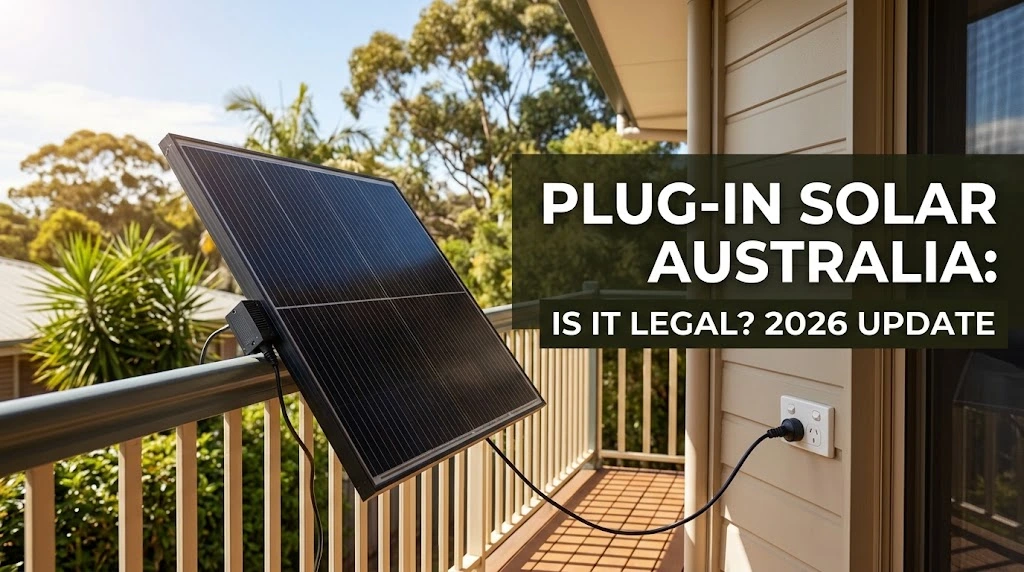
If you’ve seen “balcony solar” or “plug-in solar” panels advertised online, you might be wondering why you can buy one but can’t legally use it in Australia yet. That’s about to change. ABC News recently reported that balcony solar could soon become legal and here’s where things stand as of September 2026.
What is plug-in solar?
Plug-in solar (also called balcony solar) is a small solar system, usually one or two panels, that connects straight into a regular power outlet through an inverter no electrician, no switchboard work, no CEC-accredited installer. The panel generates power during the day and feeds it directly into your home’s circuits, cutting down what you draw from the grid.
Overseas versions typically produce 600–800 watts and cost up to about $1,300 installed. Solar Citizens estimates a payback period of 4–10 years, with savings of roughly $300–$400 a year per panel modest, but appealing to the roughly one in three Australians who rent or live in an apartment and can’t put a full system on the roof.
Why it's not legal yet
Right now, plugging one of these systems into a standard outlet breaches two mandatory Australian standards:
- AS/NZS 5033 — the installation standard, which requires solar connections to be installed by a CEC-accredited electrician.
- AS/NZS 4777.1 — the grid-connection standard, covering voltage, frequency, anti-islanding protection and how a system behaves during a blackout.
Regulators’ main safety concerns are around a system continuing to feed power into the grid during an outage (a risk to linesmen), and improper voltage or frequency injection destabilising local transformers or neighbours’ equipment. So while you can legally buy a plug-in panel in Australia today, you can’t legally plug it in and use it. Doing so risks fines, having the equipment removed, or complications with your insurer.
What's happening now
Pressure to fix this has been building fast. In 2026:
- The UK legalised plug-in solar after prioritising it in March.
- New Zealand is working toward legalising it within 9–12 months.
- Australia's federal and state energy ministers agreed to explore a safe pathway, with a report due back later in 2026.
- Federal Energy Minister Chris Bowen has said the change "is not happening overnight" but confirmed that once proper standards are in place, plug-in systems should qualify for existing rebates such as the Cheaper Home Batteries program. If you're weighing up a battery in the meantime, Get Battery Quotes has current pricing for home battery systems.
- Victoria's apartment solar inquiry, reporting in September 2026, is expected to feed into the national conversation, particularly around strata and landlord-tenant rules.
- Advocacy group Solar Citizens is pushing for full legalisation by 1 July 2027.
Germany’s regulatory model which already allows plug-in systems up to a set wattage cap is being looked at as a reference point for Australian standards.
What still needs to be sorted out
According to those closest to the process, the technical side isn’t the hard part. Solar engineer Glen Morris has argued that a product standard, a power-capacity limit (around 800 watts), and a network registration process are all that’s really needed and that these just require a regulatory deadline, not new technology.
The trickier issues are more about people than engineering:
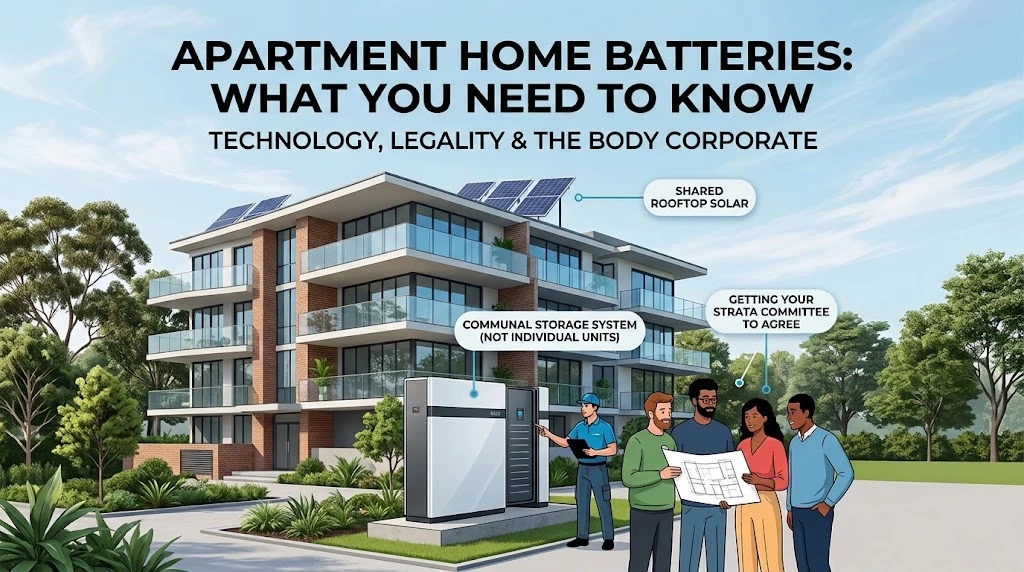
- Strata and body corporate rules many apartment buildings currently have no clear process for approving balcony solar.
- Landlord-tenant regulations renters generally need permission to attach anything to a balcony or exterior wall.
- Coordination across states each state and territory needs to align its electrical safety rules, which historically move at different speeds.
What this means if you're thinking about solar now
If you’re a homeowner with roof access, a full rooftop solar system installed by a CEC-accredited installer remains the better-value, already-legal option and it will still qualify for rebates plug-in systems may or may not get initially. Our buying guide walks through how to compare quotes and installers.
If you’re a renter or apartment dweller who’s been waiting for a way into solar, the realistic timeline is sometime between late 2026 and mid-2027, depending on how quickly Standards Australia and the states move. Buying a plug-in panel today won’t get you a legal head start you’d still need to wait for the rules before connecting it.
We’ll keep this page updated as Standards Australia, the state regulators, and the Cheaper Home Batteries program clarify the rules.
Ready to compare battery quotes for your home?
While plug-in solar makes its way through the approval process, a home battery is already legal, already rebate-eligible, and pairs well with any solar system you install now or later.