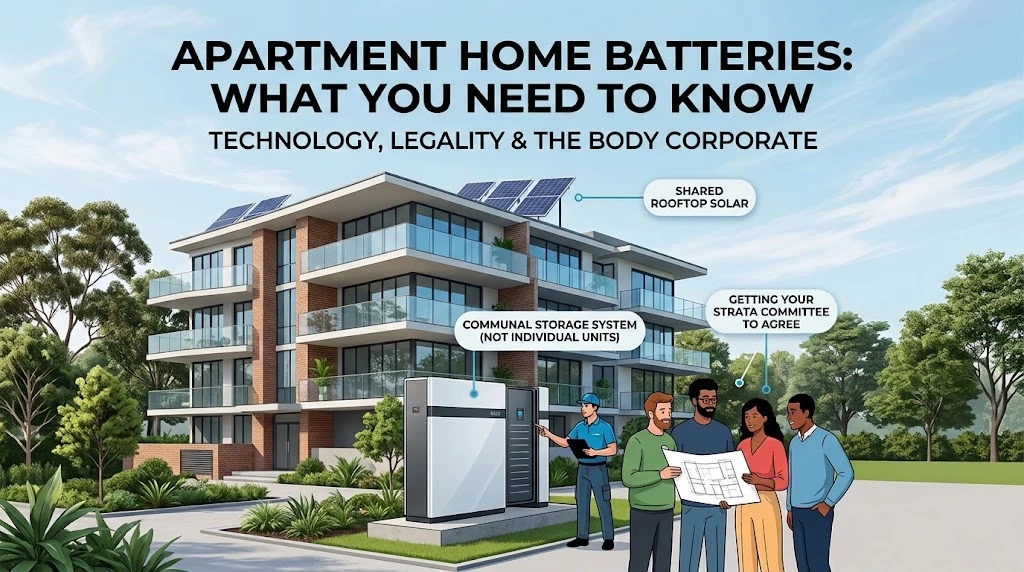
Shared solar and home batteries for apartment buildings have picked up real momentum this year, and the technology behind them is genuinely improving. But if you live in an apartment and you’re excited about finally getting a battery, there’s a gap between “the product now exists” and “you’ll have one installed next month” that’s worth understanding before you get your hopes up or your body corporate’s.
The technology is real, but it's still one company's product
Most of the recent coverage of apartment battery storage centres on a single system: Allume Energy’s SolShare, a shared solar and battery platform designed specifically for multi-residential buildings, where a central unit splits solar generation (and now battery discharge) across individual apartments in real time, metered separately for each unit.
It’s a genuinely useful piece of engineering for a hard problem most apartment blocks can’t simply give each unit its own rooftop solar panels and battery, so someone needed to solve the “how do we split one system fairly across many meters” problem. Allume has been doing that since 2019, and adding battery storage to the same shared-metering approach is a sensible next step.
It’s worth knowing, though, that when you read glowing coverage of “apartment batteries are finally here,” you’re usually reading coverage of one company’s product launch, based largely on that company’s own figures. That’s not a reason to dismiss it. It’s a reason to treat quoted savings numbers as a starting estimate rather than a guarantee, and to ask any installer proposing a system what independent basis they have for the numbers they quote you, since savings depend heavily on your specific building’s consumption patterns, solar orientation, and electricity tariffs.
The Real Obstacle to Home Batteries for Apartments
If you own or live in an apartment, the technology being ready is honestly the smaller part of the story. The bigger one is getting a building full of owners to agree to it and that’s been the actual bottleneck for apartment solar for years.
Here’s some genuinely good news on that front: NSW strata law changed in July 2025 to make this meaningfully easier. Installing solar (and other sustainability infrastructure, including EV chargers) on common property used to require a special resolution. A 75% approval threshold, which in a building with dozens of owners and typically low meeting attendance is a genuinely hard bar to clear. That threshold has now dropped to a simple majority just over 50%.
If you’re in NSW, this is arguably a bigger deal for apartment battery access than any individual product launch, because it directly addresses the obstacle that’s stopped the most projects historically. If you’re in another state, it’s worth checking your own strata legislation, since thresholds and rules vary and not every state has made the same change.
Even with a lower voting threshold, getting a battery installed in an existing apartment building still means navigating a real process: getting the proposal onto a general meeting agenda, having a quantity surveyor or the building’s insurer assess implications for common property, and practically speaking someone in the building willing to champion the proposal and answer other owners’ questions. None of that is a reason not to pursue it, but it’s a multi-month process in most buildings, not a phone call and an install date.
What actually determines whether it's worth pursuing in your building
A few practical factors matter more than which brand of shared system you’re considering:
Existing solar. If your building already has a shared solar system (increasingly common thanks to state grant programs), adding battery storage to it is a much smaller ask than proposing solar and storage from scratch. You’re expanding something owners have already approved and are already seeing bills reduced by.
Roof space and access. Battery units still need to go somewhere, and in an existing building that’s often a car park, a plant room, or a common area rather than the roof itself (where the solar panels already are). Ask early whether your building actually has a suitable location, since this affects both feasibility and cost.
Embedded networks. Some apartment buildings run an embedded electricity network, where a private operator on-sells power to residents rather than each apartment having its own retail contract. This changes how a shared battery system interacts with billing and may require different approvals or agreements than a standard strata building.
Grant program eligibility. State programs (like the ones in NSW and Victoria that have subsidised a meaningful share of existing shared apartment solar installs) come and go and change eligibility criteria over time. Worth checking current status directly rather than assuming last year’s grant terms still apply.
Getting Your Body Corporate to Say Yes
If you want to actually move this forward rather than just admire the headline, the practical path looks like this: check whether your building already has shared solar (if so, ask your existing installer whether a battery add-on is compatible); check your state’s current strata voting threshold for sustainability infrastructure, since that determines how hard a “yes” actually is to get; and get an actual quote with real numbers for your specific building rather than relying on another building’s published savings figures, since apartment consumption patterns and solar access vary enormously between buildings.
If you’re weighing this up for a house rather than an apartment, the sizing and rebate fundamentals are the same starting point. Our battery guide covers those basics, and you can get up to 3 quotes from accredited installers to see what’s realistic for your situation, apartment or otherwise.