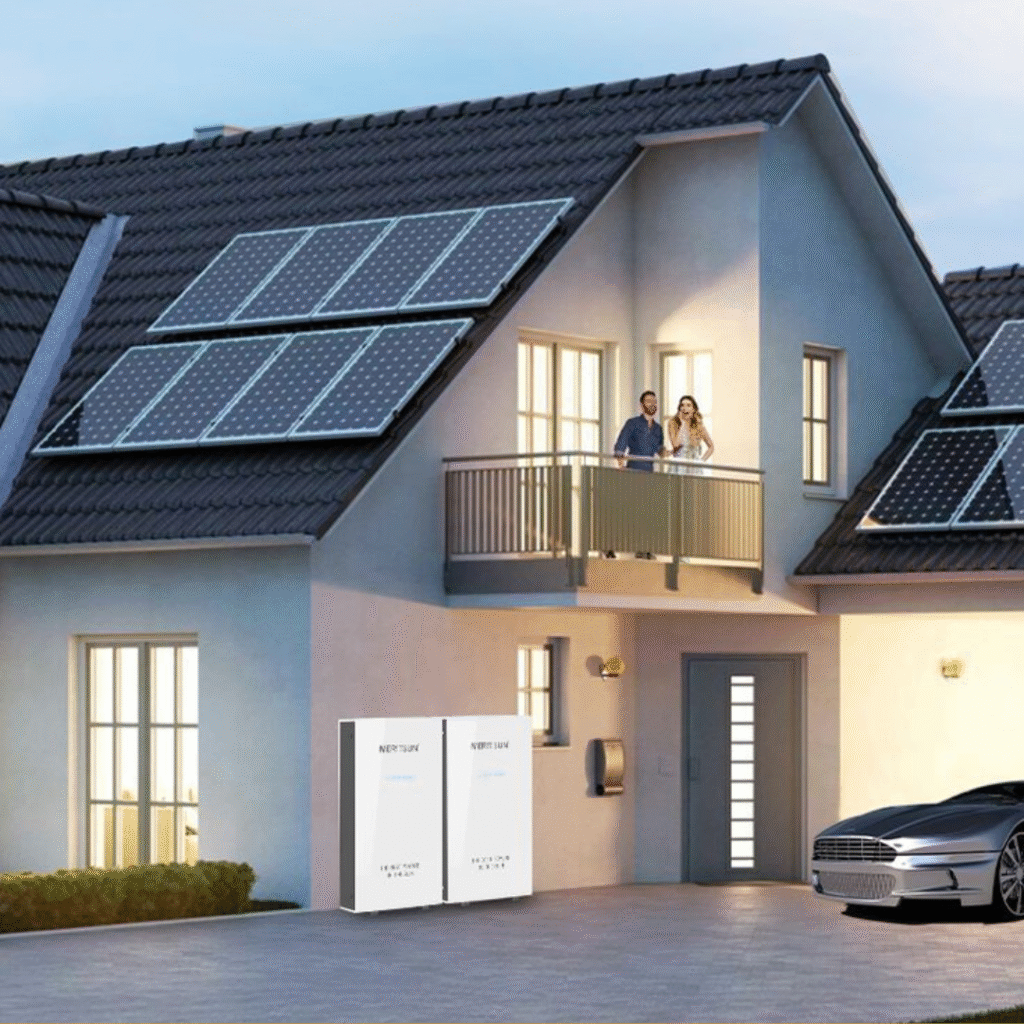
The Fox ESS Power Cube puts a hybrid inverter and stackable battery modules into one plug-together unit. If you are comparing home battery quotes in Australia, it is a new option worth understanding before an installer puts it on a quote. Here is what it includes, how sizing interacts with the federal rebate, and what to ask before you say yes.
Quick answer: what is the Fox ESS Power Cube?
The Power Cube is an all-in-one home energy system from Fox ESS. The inverter and battery modules connect directly, with no cables needed between them, so the installer is mounting one stack instead of wiring separate boxes. Fox ESS lists single-phase models from 5 kW to 12 kW and three-phase models from 5 kW to 15 kW. Each stack takes two to nine EQ5500 battery modules.
Power Cube at a glance
Feature | What Fox ESS lists |
|---|---|
Inverter size | Single-phase 5 to 12 kW; three-phase 5 to 15 kW |
Battery modules | 2 to 9 EQ5500 modules, about 5.46 kWh each |
Total capacity | About 10.9 to 49.1 kWh |
Solar input (single-phase) | Up to 200% of inverter size, 4 MPPTs |
Backup | Built-in gateway with 63 A bypass for whole-home backup |
Switchover | 4 ms seamless switch |
Protection | IP66 rating, AFCI, DC and AC surge protection |
Monitoring | FoxCloud 2.0 app and web portal |
VPP | Listed as VPP-ready |
Three-phase models are shown as “coming soon” in Fox ESS’s launch material, so confirm availability with your installer before planning around one. Specs above come from the Fox ESS Australia Power Cube datasheet, so check it for the latest figures.
Why an all-in-one battery appeals to homeowners
Three things stand out.
- Simpler install. Fewer components and no inverter-to-battery cabling means less to go wrong on the day, and a tidier result on your wall.
- Built for outdoors. An IP66 rating means dust and water protection suited to a garage, side wall or carport.
- Room to grow. You can pick a stack of two to nine modules, so the same platform suits a small apartment-style home or a large all-electric house.
The trade-off is that the inverter and battery are one platform. If you already own a solar inverter and only want to add storage, an all-in-one is not always the cheapest route. Our guide to hybrid inverters for solar batteries and AC vs DC coupled batteries explains when each setup makes sense.
How many modules should you choose? The rebate matters
The federal Cheaper Home Batteries Program no longer pays the same rate on every kilowatt-hour. From 1 May 2026 the first 14 kWh of usable capacity earns 100% of the rebate, the next 14 kWh earns 60%, and 28 to 50 kWh earns 15%. Anything above 50 kWh earns nothing.
Because the Power Cube grows in 5.46 kWh steps, you can see exactly where each module lands. These are estimates only, using the May to December 2026 rate of about $252 per kWh (6.8 STCs).
Modules | Capacity (kWh) | Estimated federal rebate |
|---|---|---|
2 | 10.92 | about $2,750 |
3 | 16.38 | about $3,880 |
4 | 21.84 | about $4,710 |
5 | 27.3 | about $5,530 |
6 | 32.76 | about $5,820 |
9 | 49.14 | about $6,430 |
The pattern is the point. Going from four to five modules adds roughly $820 of rebate, but going from five to nine adds only about $900 in total. Past 28 kWh each extra module barely moves the rebate, so the decision there is about whether you actually use that much energy, not about chasing a discount. Our battery rebate guide explains the tiers in full, and the STC rate keeps stepping down over time, so ask your installer which rate applies on your install date.
Backup power: what the 63 A gateway means
The built-in gateway is rated at 63 A. In many single-phase homes that is enough to back up the whole switchboard rather than a few selected circuits. That sounds like a clear win, but two limits still apply:
- The inverter size caps how much you can run at once. A 5 kW unit will not run a ducted air conditioner, oven and EV charger together.
- Backup only helps if the battery has charge left. Settings such as a blackout reserve decide how much is held back.
See what happens to your battery in a blackout for how this plays out in practice.
Solar sizing and network limits
The Power Cube accepts up to 200% solar input on single-phase models, so a 5 kW inverter can take up to 10 kW of panels. That suits homes planning more panels later or an EV. Keep in mind that your local network sets its own limits on single-phase inverter size, and those limits differ by state and network operator. Your installer should tell you which model your network will approve before you commit.
Is the Power Cube eligible for the rebate and a VPP?
To claim the federal rebate, a battery must be approved by the Clean Energy Council (CEC) and installed by an accredited installer. It must also be capable of joining a virtual power plant, although you are not forced to join one. Fox ESS lists the Power Cube as VPP-ready and says its single-phase models are CEC approved. Always match the exact model number on your quote against the CEC approved battery list, because rebates are claimed against the model installed on the day. If you are weighing a VPP, read our virtual power plant guide first.
Questions to ask your installer before choosing a Power Cube
- Which exact Power Cube model and module count are you quoting, and is it on the CEC list today?
- Will the 63 A gateway back up my whole home or only selected circuits?
- What inverter size will my network allow at my address?
- How many modules do I need for my evening and overnight use, and where does that sit against the rebate tiers?
- What does the warranty cover, and what must I register to keep it valid?
- Who provides local support if something needs servicing?
A good handover matters as much as the hardware. Use our home battery installer checklist on install day.
Frequently asked questions
A stack takes two to nine EQ5500 modules at about 5.46 kWh each, giving roughly 10.9 to 49.1 kWh.
Fox ESS has launched it here, with single-phase models first and three-phase models marked as coming soon. Check stock and model availability with your installer.
Yes, it includes a built-in gateway with 63 A bypass and a 4 ms switchover. How much of your home it can power depends on the inverter size and your battery’s charge level.
If the exact model is CEC approved, VPP-capable and installed by an accredited installer, it can qualify. The rebate is tiered, so larger stacks earn less per extra kWh.
Price depends on the model, module count and your site, so there is no single figure. The quickest way to see real numbers is to compare quotes side by side.
Compare Power Cube and other battery quotes
GetBatteryQuotes connects you with up to 3 vetted, battery-trained installers so you can compare systems, including all-in-one options like the Power Cube, with your rebates checked first. Get up to 3 battery quotes or browse our independent battery reviews.