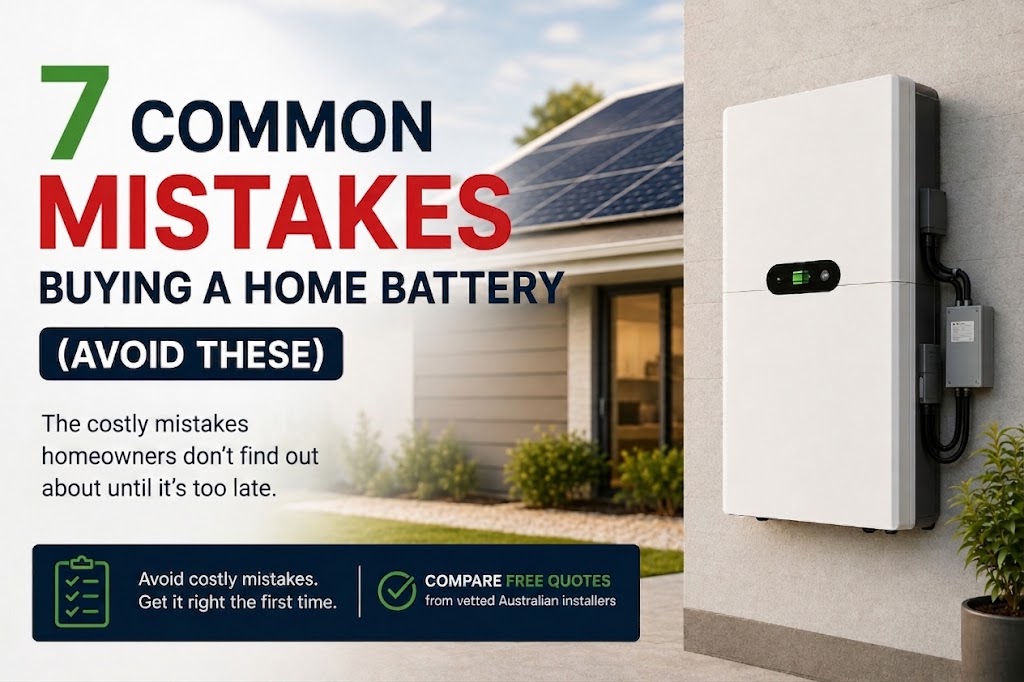
A home battery is a significant purchase, and most of the costly mistakes don’t show up on install day they show up months later, as an unexpected bill, a blackout that doesn’t work the way you expected, or a warranty that doesn’t cover what you assumed it did. The good news is that almost all of these mistakes are avoidable, as long as you know what to ask before you sign anything.
Here are the seven mistakes homeowners run into most often, and exactly what to do instead.
Skip the guesswork. Get free, no-obligation battery quotes from vetted installers and compare real numbers side by side.
1. Accepting a Quote Without Anyone Visiting Your Home
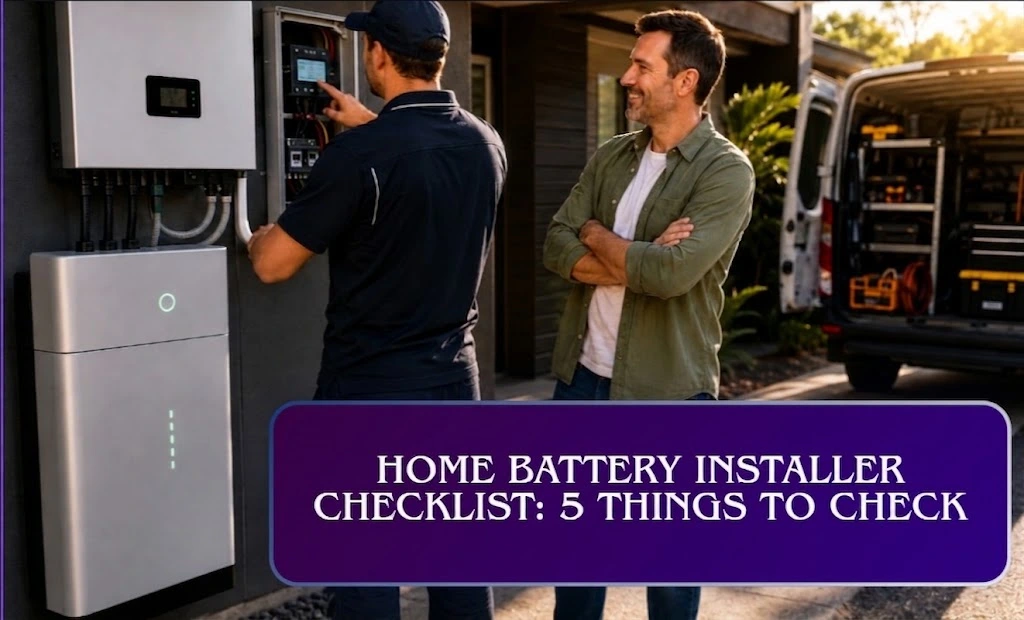
A price and a battery model sent over email based on a couple of photos isn’t a firm quote it’s an estimate. The condition of your switchboard, where the battery can safely go, and how cabling needs to be routed all depend on things that can’t be properly assessed from a photo. Before you commit, ask whether someone from the installation team has physically inspected your switchboard and the proposed battery location. And don’t stop at a single quote: getting at least two or three lets you compare not just the price, but what’s actually included two quotes for “the same battery” can turn out to be very different jobs once you look closely.
2. Assuming the Whole House Will Have Power in a Blackout
This is one of the most common surprises battery owners run into after their first outage: the battery is working exactly as designed, but only a handful of circuits wired into a separate “backup” or “essential loads” board are actually protected. Unless you’ve specifically paid for whole-home backup (which usually means extra switchboard work), things like ducted air-con, the oven, or power points in other rooms often won’t run during an outage. If backup power is a reason you’re buying a battery, go through it circuit by circuit with your installer lights, fridge, internet router, a couple of power points and get the answer in writing, not just a verbal assurance.
3. Buying a Home Battery That Isn't on the Approved Product List
In Australia, batteries eligible for the federal rebate and properly covered under standard home and insurance policies need to be on the Clean Energy Council’s approved product list, installed by a CEC-accredited installer. Every so often someone buys a battery online because it looks like a bargain, only to find out afterwards that it isn’t on the approved list. That can mean losing rebate eligibility entirely, or taking on more risk if something goes wrong later. Before you buy anything outside a quoted installer package, check the battery is CEC-listed and check your installer’s own accreditation while you’re at it, rather than taking it on trust.
4. Not Reading Past the Headline Warranty Number
Most batteries carry a “10-year warranty” on the box, but the number of years is only part of the story. The detail that actually matters is usually a few pages into the document: the guaranteed capacity retention (for example, 70% of original capacity after 10 years) and the maximum number of charge cycles covered. Two batteries can both advertise a 10-year warranty while covering very different amounts of real-world use which matters even more if you’re planning to join a VPP that cycles the battery harder than typical home use would. Ask for the manufacturer’s actual warranty document, not just the installer’s summary, and compare that before you compare price.
5. Not Checking Whether Your Electricity Plan Actually Suits a Battery
A battery’s payback period depends heavily on the electricity plan behind it. On a flat-rate tariff, a battery has a lot less to work with than on a time-of-use plan, where power is expensive at peak times and cheap or free at others. Joining a Virtual Power Plant (VPP) can improve the numbers further, but it’s worth understanding the trade-off: most VPP agreements let your retailer draw on your stored energy during high-demand periods, and some come with minimum contract terms or exit conditions. Before you buy, ask your installer or retailer to model realistic savings against your actual tariff and usage not a generic example and treat any payback estimate under about five years with a healthy amount of scepticism.
6. Letting the Battery Be Sized on a Guess
A battery should be sized against your actual electricity usage, not a rule of thumb. A good installer will pull your real interval data from your smart meter (your retailer or distributor can usually provide it) and size the system against how your household actually uses power across a real day, including winter. A battery sized off a generic “average household” assumption can end up too small to cover a typical evening, or bigger and pricier than you actually need. If you’re quoted a battery size within minutes of a phone call, without anyone asking for your usage data, treat that size as a guess rather than a measurement, and ask them to size it properly before you proceed.
7. Signing on the Day Because of a Time-Limited "Special"
This is an old sales tactic that’s still common: a today-only discount, designed to stop you from getting a second opinion. A genuine price doesn’t usually evaporate overnight, and the best way to know if a deal is actually good is to compare it against at least one other quote which you can’t do if you’re pressured into signing on the spot. Door-knocker deals and “free battery with your solar” offers are where this shows up most often; if there’s real urgency to sign immediately, treat that as a reason to slow down, not speed up.
The Common Thread
Every one of these mistakes comes down to the same habit: accepting a verbal assurance instead of asking for it in writing or checking it yourself. A reasonable installer will happily walk you through the switchboard, the backup circuits, the approved product list, the warranty fine print, your tariff fit, and how they sized your system before you sign, not after.
Get Up To 3 Quotes and ask these exact questions before you commit.
Frequently Asked Questions
Accepting a quote that was never based on an actual look at the switchboard, the wall space, or your real electricity usage which leads to surprise costs or a battery that’s sized wrong for your home once installation day arrives.
Not automatically. Most installs back up a limited set of circuits on a dedicated “essential loads” board unless you’ve specifically paid for whole-home backup. Confirm exactly which circuits are covered before installation.
Only if it’s on the Clean Energy Council’s approved product list otherwise you risk losing rebate eligibility and complicating your insurance cover. Check the approved list before buying anything outside a quoted install.
At least two or three. Prices and inclusions vary a lot between installers for what looks like “the same battery,” and a single quote gives you nothing to compare it against.